
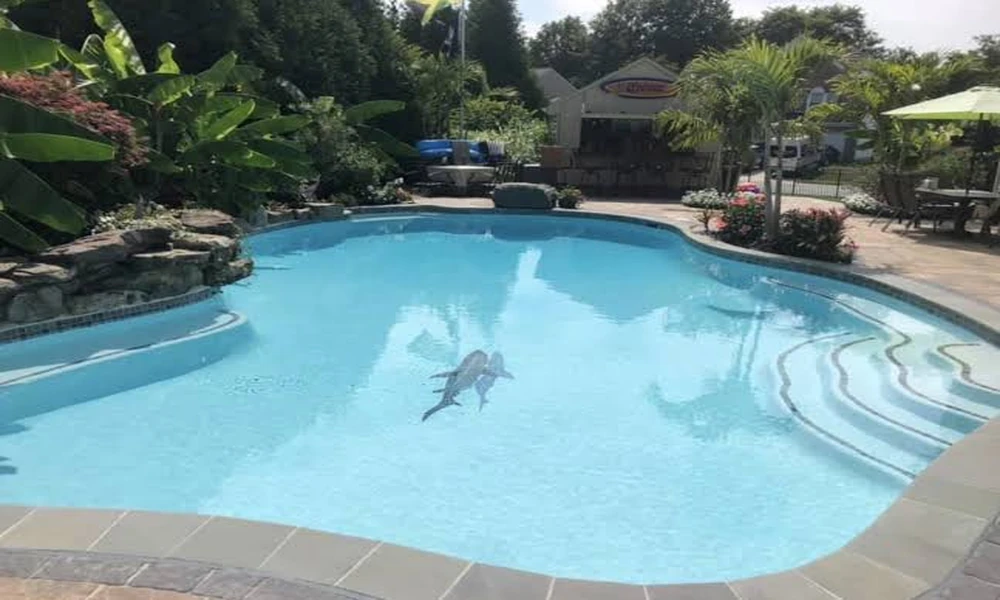
A pool renovation can combine retained patio materials with new finishes when the relationship is intentional. Start by establishing what is suitable to keep, then compare proposed materials beside those existing surfaces. The design does not need to imitate a brand-new yard. It needs a clear explanation for where the older elements remain and how the new work belongs with them.
Establish what can stay before choosing what looks right
The wish to preserve a familiar patio is a reasonable starting preference, but its condition and relationship to the planned work require assessment. Ask the renovation professional what can remain, what needs investigation and what may be affected by changes at the pool edge. An attractive colour match is premature if the proposed retained surface cannot be incorporated as intended.
That discussion can cover a range of work. Jameson Pool & Spa’s renovation service describes projects involving liners, equipment and patio upgrades. Use the consultation to establish the scope relevant to your pool, including the relationship between retained finishes and necessary repairs. The fact that an element looks dated does not by itself determine its technical condition.
Explain why you want to keep particular materials. Perhaps the patio extends into a garden area outside the proposed renovation, or its character suits the house. Perhaps retaining it supports the project budget. Different reasons suggest different design responses. A surface kept because it is loved may deserve visual emphasis; one retained as a temporary budget choice may call for a more flexible transition.
Document the existing surfaces in ordinary conditions. Photograph the patio from the kitchen, the main seating position and the route into the yard. Include the house wall, fencing and nearby fixed elements in the images. These views reveal how many colours and textures already participate in the setting, which is difficult to judge from a single close-up of a paving unit.
Discuss the intended boundary of the renovation explicitly. A neat line on a drawing can become a complicated junction in the actual yard. Have the professional explain how that edge will be resolved and what work is included. The household should understand the visible result without being expected to specify the technical connection between materials.
Sample the junction between existing and proposed finishes
Bring samples to the material that will remain whenever the supplier and project team make that possible. A new coping sample may appear neutral in the showroom but read differently beside an older patio. View the combination in the yard rather than relying entirely on separate product photographs. The relationship between the samples matters more than whether each looks attractive alone.
A close imitation is not always the most convincing choice. Two materials that nearly match can draw attention to their differences. A deliberate shift in tone or texture may make the transition easier to understand. This is an aesthetic judgment to test with the designer, not a rule that every renovation must contrast old and new.
Look at the combination in more than one light condition. Note what changes and what remains agreeable to you. A decision made under the showroom lights may deserve another look outdoors, particularly when a finish will occupy a large visible area. Photographs can help record the options, but your view of the actual sample should guide the colour discussion.
Keep the sample group small enough to compare. Lay out the retained patio reference, proposed edge finish and liner sample as a connected set, adding another material only if it is genuinely part of the project. A tray crowded with every available choice can make selection harder by turning unrelated possibilities into competing requirements.
Ask the contractor how the sample relates to the final product. Natural variation, available formats and the scale of the installed pattern may affect what you should expect. Obtain product-specific information rather than assuming a small sample guarantees a uniform field. Confirm the selected product and finish in writing so later substitutions receive the same visual review.
Repeat a small number of relationships across the yard
Once the main junction works, look for a modest way to carry its relationship into the wider setting. A proposed border might pick up a colour from the house, or a simple furniture finish might sit comfortably with both the retained patio and the new edge. Repetition can connect the yard without requiring every material to be identical.
Avoid giving every remaining object a makeover simply because one surface is new. Renovation decisions can spread from the pool to furniture, fences and planting containers without improving the central design. Review those objects in place first. Some may already provide a useful connection between the old and new work that a coordinated shopping collection would remove.
Keep practical use in the conversation as the palette develops. The location of seating, storage and service access still matters. An elegant finish arrangement should not force the family to move a table into an awkward position to hide a transition. Ask the designer to show the selected materials on the layout the household intends to use.
If work will be completed in stages, describe the appearance of the intermediate yard as well as the final vision. A deliberate stopping point can look complete even while later plans remain possible. The contractor should explain the physical implications of staging, and the design discussion should acknowledge what the household will see between phases.
Before approving the materials, return to a familiar seat and imagine the finished pool from there. The old patio and new work should make sense together at the scale of an ordinary afternoon. A successful transition is one the eye accepts in the yard, not merely a pair of samples that seemed compatible on a showroom counter.
